Choosing a built-in vacuum system is a smart upgrade for cleaner air, stronger suction, and quieter operation. But many homeowners and builders find themselves comparing central vacuum vs. Hide-A-Hose and wondering which option makes the most sense.
Both systems use a power unit and in-wall piping to remove dust and debris from living areas. The difference comes down to hose storage, cost, installation layout, and day-to-day convenience. Here’s a clear breakdown to help you decide which solution fits your home, lifestyle, and budget.
Jump to Section:
What Is a Traditional Central Vacuum System?
A traditional central vacuum system features a power unit installed in a garage, basement, or utility space. PVC piping runs through interior walls to strategically placed inlets throughout the home.
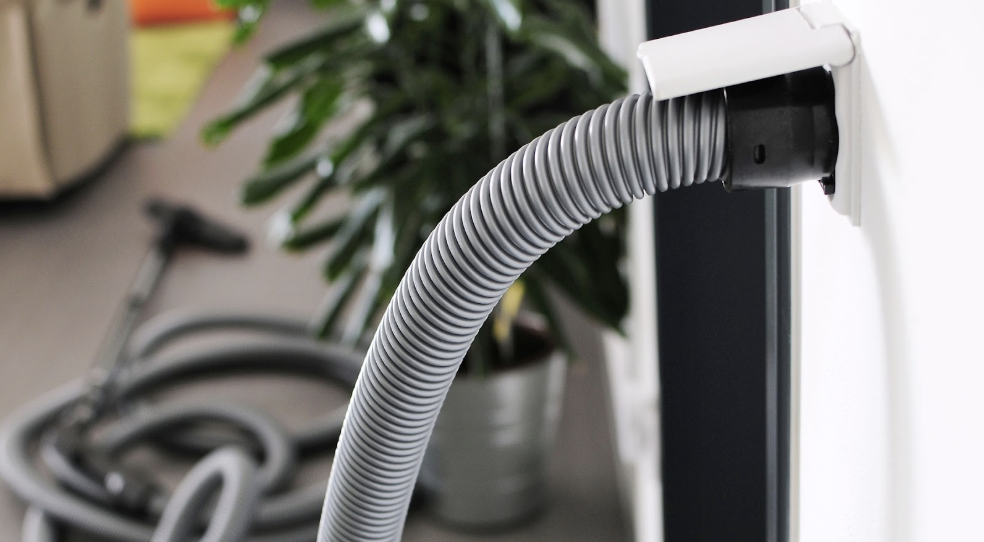
To clean, you plug a lightweight hose into a wall inlet and move it from room to room as needed. Debris travels through the piping to a large collection canister, and filtered air is exhausted away from living spaces.
How It Works
-
- One power unit provides suction for the entire home
- One hose (typically 30–50 feet) is moved between inlets
- Debris collects in a central canister
- Air is filtered and vented away from living areas
Common Use Example
A homeowner cleaning a two-story home may plug the hose into an upstairs hallway inlet to vacuum bedrooms, then move the same hose downstairs to clean living areas. One hose could cover the entire home.
What Is a Hide-A-Hose Central Vacuum System?
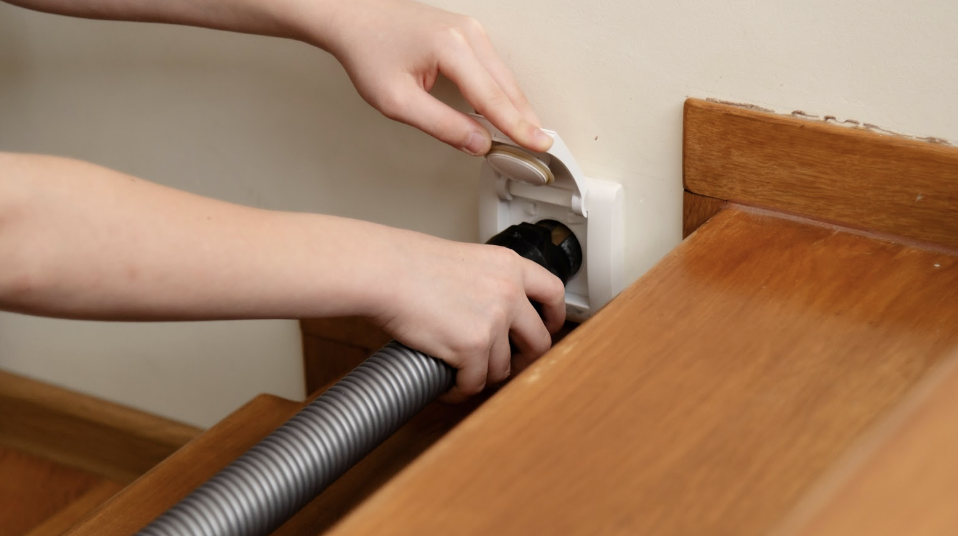
Hide-A-Hose is a type of central vacuum system with built-in hose storage in the wall. Instead of carrying and storing a hose manually, each inlet contains its own retractable hose stored inside the wall piping.
When you open the inlet door and pull the hose out, suction activates. When finished, the hose retracts back into the wall using suction power.
How It Works
-
- Each inlet has its own retractable hose
- Hoses are stored inside dedicated piping
- The same remote power unit provides suction
- Hose length options vary by inlet location
Common Use Example
In a busy kitchen or mudroom, a homeowner pulls the hose directly from the wall to clean spills or pet hair, then retracts it immediately when finished. No carrying or closet storage required.
Central Vacuum vs. Hide-A-Hose: Key Differences
While both systems share the same basic vacuum technology, the ownership experience differs in meaningful ways.
1. Cost Comparison
Cost is one of the biggest differentiators. The traditional central vacuum cost is generally lower because you purchase one hose and standard inlet valves. You physically move the hose from port to port.
Hide-A-Hose systems cost more because:
-
- Each inlet includes its own hose
- Additional piping is required to store hoses in the wall
- Installation is more complex
Since Hide-A-Hose has a hose for every inlet, the total hose footage increases. This adds material and labor costs, but also increases convenience.
If budget is the primary concern, a traditional system is typically more affordable. If convenience is a priority, Hide-A-Hose may justify the investment.
2. Installation Differences
Both systems require professional planning and layout design, especially in new construction.
Central Vacuum Installation
-
- CentralVac thin-wall PVC piping between the inlets and the power unit
- Fewer piping runs
- More flexibility in retrofit situations
- Typically simpler and less labor-intensive
Hide-A-Hose Installation
-
- Requires specialized pipe fittings for hose storage
- Each inlet must accommodate a retractable hose
- The layout must allow smooth hose retraction
- Works best when planned during new construction
Hide-A-Hose installation can be done in retrofit projects, but it requires careful evaluation of wall space and routing options.
3. Hose Storage and Daily Use
This is where user preference matters most.
Traditional Central Vacuum
-
- One hose is stored in a closet or utility space
- Must be carried between inlets
- Less in-wall complexity
Hide-A-Hose
-
- Hose stored inside the wall
- Always ready at each inlet
- No manual storage required
In larger homes, some homeowners prefer Hide-A-Hose to avoid carrying a long hose between floors. Others don’t mind moving a hose and prefer the lower upfront cost.
4. Parts and Maintenance
Both systems use similar power units and core components.
Central Vacuum Parts
Hide-A-Hose Parts
-
- Power unit
- Specialized inlet valves
- Retractable hose assemblies
- Hose storage piping
- Standard cleaning attachments
Maintenance requirements are similar. You’ll replace bags every few months, depending on usage. With Hide-A-Hose, retractable hose assemblies may occasionally require servicing over time due to moving parts.
Similarities Between Both Systems
It’s important to note that suction performance is not inherently different. Both systems:
-
- Use a remote power unit
- Provides stronger suction than most portable vacuums
- Improve indoor air quality by venting debris away from living spaces
- Operate more quietly in cleaning areas
- Increase long-term home value
The difference is convenience and infrastructure, not core cleaning capability.
Which Option Is Right for You?
When deciding between central vacuum vs. Hide-A-Hose, there are several factors to consider.
Choose a Traditional Central Vacuum If:
-
- You want a lower upfront cost
- You’re comfortable moving a hose between inlets
- You’re retrofitting an existing home
- You prefer a simpler installation
Choose Hide-A-Hose If:
-
- Convenience is your top priority
- You want no visible hose storage
- You’re building a new home or doing major renovations
- Budget allows for premium features
Builders often recommend Hide-A-Hose for custom homes where convenience and design integration matter. Traditional systems remain extremely popular for homeowners focused on value and performance.
Budget Considerations: Long-Term Value
While the Hide-A-Hose cost is higher initially, some homeowners view it as a lifestyle upgrade. The ease of access can encourage more frequent cleaning.
Traditional systems deliver excellent cleaning performance at a lower cost than central vacuums, making them attractive for practical buyers or investment properties.
Both systems typically outlast portable vacuums and can be serviced with replacement central vacuum parts or hide-a-hose parts as needed.
Ready to Choose the Right Built-In Vacuum System?
Both traditional central vacuum systems and Hide-A-Hose systems offer powerful, whole-home cleaning with quieter operation and improved indoor air quality. The right solution depends on your budget, construction timeline, and how much convenience you want built into your daily routine.
If you’re comparing central vacuum vs. Hide-A-Hose, the best next step is a personalized assessment. An experienced CentralVac dealer can evaluate your floor plan, recommend ideal inlet placement, review hose length options, and provide a clear breakdown of installation requirements and total cost. You can contact us directly, and we can help with placement and quoting.
Upgrade your home with a built-in cleaning system designed for performance, convenience, and long-term value.
Related Articles
How to Improve Indoor Air Quality With Central Vacuum Systems 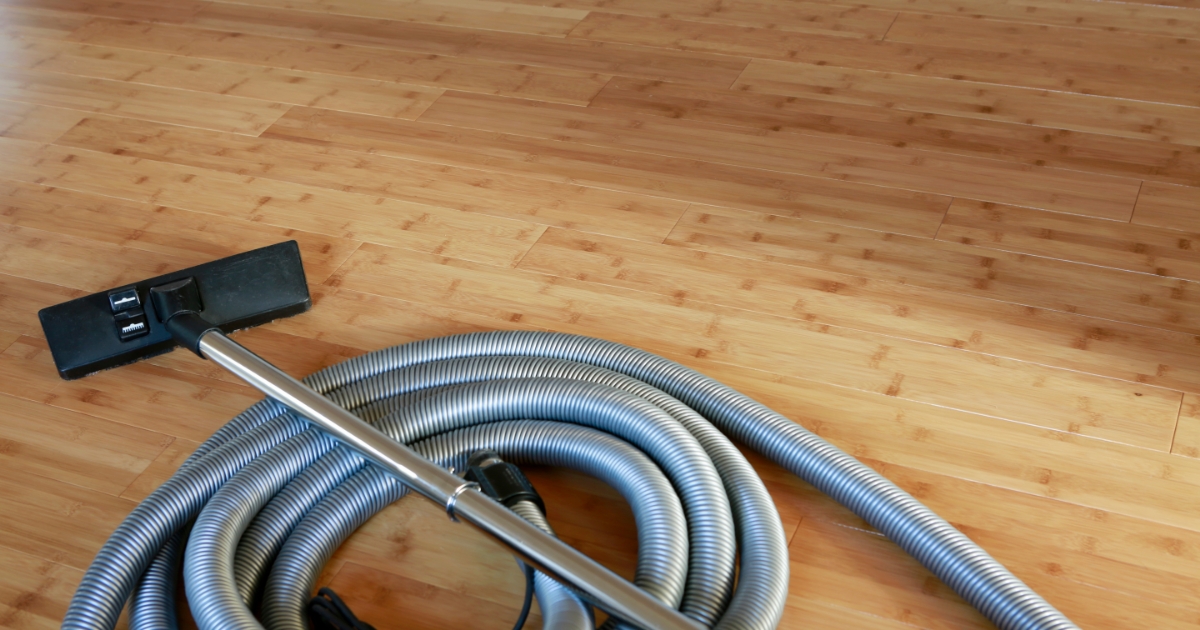
Find out about key vacuum benefits and common concerns.
Central Vacuum Hose Guide: Types of Central Vacuum Hoses 
Learn about the best types of hoses for your central vacuum system.
Central Vacuums vs Upright Vacuums – What’s Best for Your Home? 
Determine which system best suits your household’s needs.