Busy homes deserve cleaner air and a faster way to tidy up. If you’re tired of lugging a heavy vacuum, fighting tangled cords, and still seeing dust settle back onto surfaces, it’s time to understand a better approach.
For anyone asking “how does a central vacuum system work?,” here’s the short version: a powerful motor is mounted outside your living areas, debris travels through in‑wall piping to a large canister, and the air is filtered and exhausted away from the rooms you breathe in, delivering deeper cleaning with less effort. CentralVac systems add premium features and expert guidance to make that experience even easier day to day. Want to find out more about central vacuum systems and how they work? CentralVac is here to help.
Jump to Section:
- The Fundamentals
- The Airflow Path
- Installation: New Build vs. Retrofit
- Performance, Sizing, and Selection
- Maintenance and Ownership Experience
- Things to Consider
- FAQS
The Fundamentals
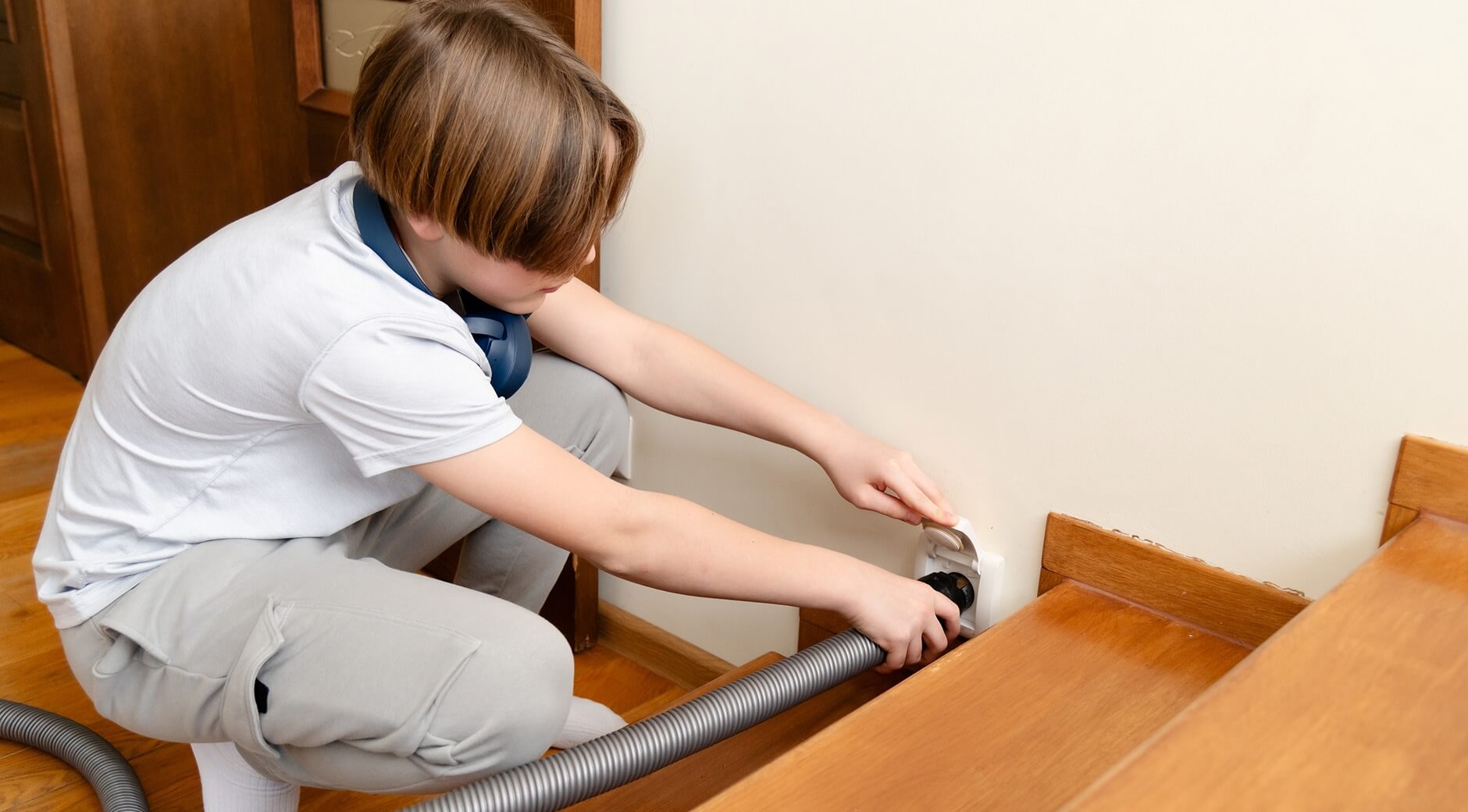
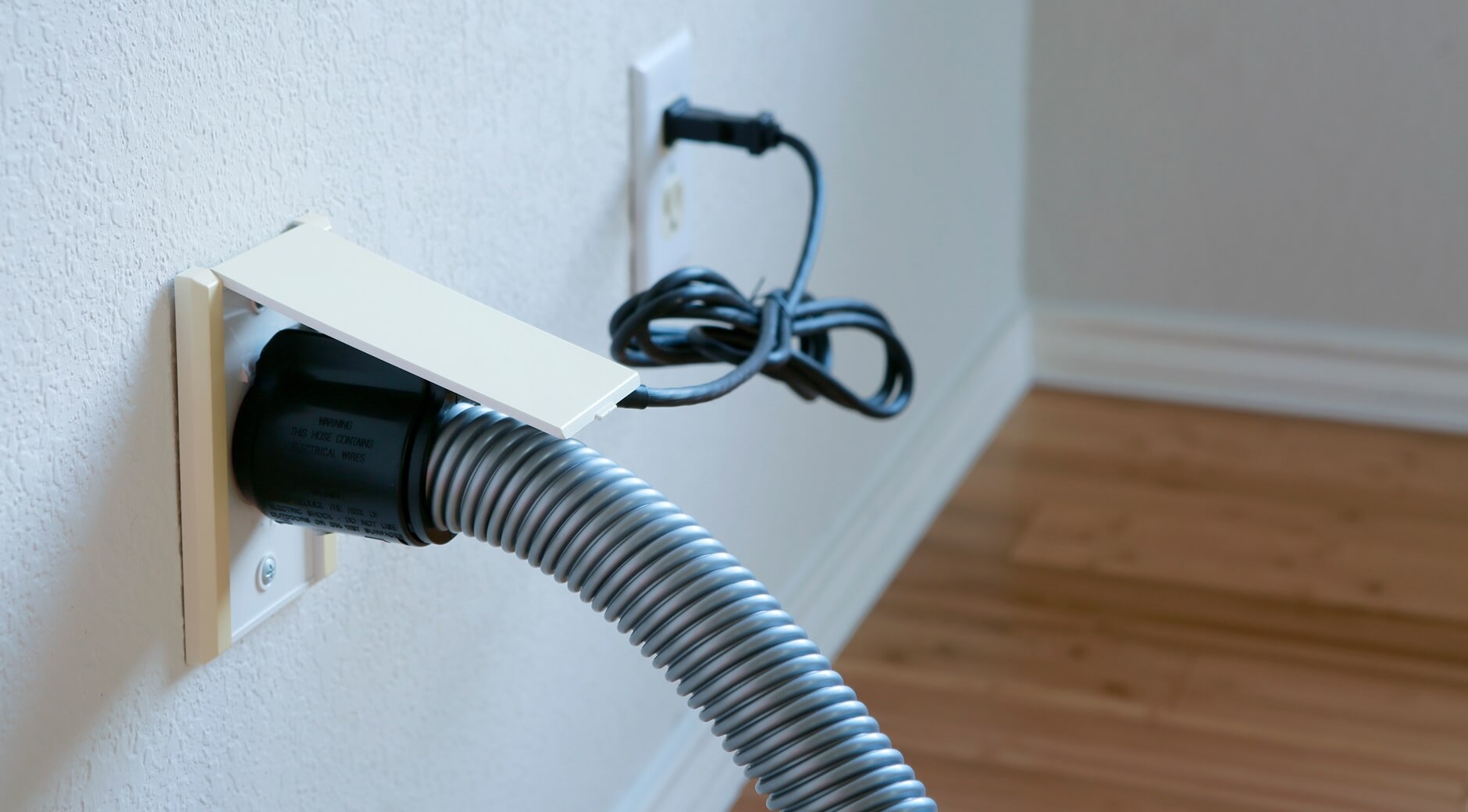
If you’ve ever wondered “what is a central vacuum system?”, think of it as a built‑in cleaning network for your home. Instead of pushing around a portable vacuum, you plug a lightweight hose into discreet wall inlets. Suction is generated by a stationary power unit, often located in the garage, basement, or utility space, so dust, dirt, and allergens get whisked out of living spaces through hidden PVC piping. Inside the canister, debris is separated and captured, and the air is filtered, often with high‑efficiency media or HEPA options, before being exhausted. Because the exhaust is handled away from living areas, fine particulates aren’t pushed back into the room like many portable vacuums. The result is stronger suction, cleaner air, and far less noise where you’re cleaning.
Core components at a glance
Before diving deeper, here’s how the main pieces fit together:
-
- Power unit and canister (stationary motor, separation, and filtration)
- In‑wall PVC piping network that connects rooms to the power unit
- Wall inlets in discreet locations throughout the home
- Lightweight hose and cleaning tools for floors, upholstery, stairs, and cars
- Exhaust and filtration system to keep recirculated air out of living spaces
The Airflow Path
Understanding how a central vacuum works is easiest if you follow the airflow:
1) Activation at the Inlet
You insert the hose into a wall inlet while the power unit is on and the unit begins generating suction.
2) Transport Through In‑Wall Piping
Air carries debris through smooth PVC tubing. Correct pipe sizing and layout minimize friction so suction remains strong across your home.
3) Separation and Filtration at the Power Unit
Debris and dust fall into the canister and are captured by a filter or bag. Many CentralVac systems support bagged, bagless, or cyclonic separation options.
4) Clean Air Management
Filtered air is exhausted outside or through high‑efficiency filtration, reducing the chance of fine particles being redistributed into your living areas.
Components and Options (CentralVac Highlights)
CentralVac systems are designed to fit a range of home sizes and cleaning styles. Features vary by model; your local dealer can help you select the right combination.
- Power units and air performance: Choose by square footage of home and cleaning style. Look at air watts, sealed suction (water lift), and airflow (CFM) to balance deep‑pile carpet performance with whole‑home coverage.
- Filtration choices: Options can include layers of cloth and paper filtration to help reduce fine dust and allergens.
- Inlets and hose styles: Standard wall inlets pair from 30–50 ft hoses; select systems support retractable hose technology that stores in the wall.
- Tools and accessories: Floor heads for hard surfaces, motorized nozzles for carpet, pet‑focused tools, and garage/car kits expand versatility.
- Exhaust and noise control: Remote mounting plus external exhaust (where applicable) keeps the operation quieter in living spaces.
Tip: Ask about CentralVac accessory kits for pets, stairs, and autos, and about retractable hose options in high‑traffic areas like kitchens or mudrooms.
Installation: New Build vs. Retrofit
Installing a central vacuum is straightforward in new construction because piping can be planned alongside plumbing and electrical. Retrofitting an existing home is also common. Installers usually place the power unit in the garage or basement, then route PVC piping through closets, utility chases, and interior walls.
Most homes require only small access points that are patched after installation; many projects are completed in a day or two. A typical single‑family home has two to four inlets, often positioned so a 30–35 ft hose reaches every area. Your CentralVac dealer or our team can design the layout, recommend venting options, and ensure the power unit’s electrical requirements are met.
Performance, Sizing, and Selection
To match performance with your home and flooring, consider these specs and practical factors:
-
- Home size and layout: Total square footage and the number of floors influence unit selection and inlet placement.
- Air watts, CFM, and water lift: Air watts reflect usable power, CFM relates to airflow for surface debris, and water lift indicates deep‑cleaning suction—balance all three for your flooring mix.
- Hose length and reach: 30, 35, and 50 ft options reduce the number of inlets needed; retractable hose systems affect piping layout.
- Filtration goals: For households with allergies or pets, ask about optimal filtration methods.
- Noise and placement: To minimize sound when cleaning, locate the power unit away from living spaces.
Maintenance and Ownership Experience
Most owners empty the filter bags every few months, depending on home size and shedding pets. Periodically check filters, verify exterior exhaust is clear (if vented), and inspect tools and hoses for obstructions. Compared with portable vacuums, maintenance is less frequent due to larger capacity and heavier‑duty components. Many CentralVac systems can be serviced or upgraded over time with new tools, hoses, and filtration options to match evolving needs.
Things to Consider
Central vacuum systems deliver standout power, cleaner indoor air, and everyday convenience—especially in larger homes or for households sensitive to dust. There are practical trade‑offs to evaluate: installation access in existing walls, the need to plan inlet locations, and higher upfront investment compared to a big‑box upright. A brief in‑home assessment by a CentralVac dealer will clarify feasibility, total cost, and which features will make the biggest difference for your home.
FAQs About CentralVac Systems
Before you decide, it helps to see how the details play out in real homes. Below are answers to common questions from homeowners exploring a CentralVac system.
How many inlets (wall ports) does a typical home need, and how are their locations determined?
Most single‑family homes use two to four wall inlets, positioned so a 30–35 ft hose reaches every room without strain. Installers map your floor plan, consider furniture placement and stairs, and then locate ports to minimize hose changes while covering all living areas.
How often do I need to empty the central vacuum canister or replace the bag/filter?
For average households, expect to change the bag every two to three months; homes with high traffic or pets may need more frequent service. Check filters during each emptying, and replace as recommended by your model to maintain peak performance.
Are central vacuum systems quieter than standard portable vacuums?
Yes, in the rooms you’re cleaning, central vacuums are typically quieter because the motor is located remotely in a garage, basement, or utility space. You’ll still hear airflow at the tool, but the loud motor noise is kept away from living areas.
Ready to Experience Cleaner, Easier Whole-Home Vacuuming?
Explore CentralVac solutions tailored to your home and priorities. Request a quote and in‑home assessment or find a local CentralVac dealer today. Your home deserves deeper cleaning, cleaner air, and a simpler routine—designed and supported by CentralVac.
Related Articles
Central Vacuum System Pros and Cons: Is It Right for You? 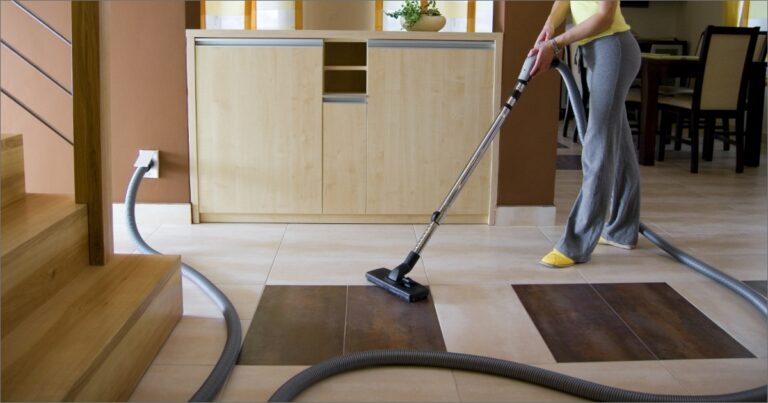
Find out about key vacuum benefits and common concerns.
Central Vacuum Hose Guide: Types of Central Vacuum Hoses 
Learn about the best types of hoses for your central vacuum system.
Central Vacuums vs Upright Vacuums – What’s Best for Your Home? 
Determine which system best suits your household’s needs.