A weak central vacuum pickup around the house almost always comes down to one thing: the bag or filter has outlived its job. Replacing your central vacuum bag or filter on a schedule (instead of waiting for symptoms to show up) keeps suction strong, keeps dust out of the air you breathe, and keeps the motor from working harder than it should. The tricky part is that the bag and the two filters inside a CentralVac system do not wear out on the same clock. Here is the replacement schedule for each part, the signs that mean you should not wait for the calendar, and what happens if a replacement gets skipped.
Jump to Section:
- Central Vacuum Bag and Filter Replacement Schedule
- Signs You Need to Replace Your Central Vacuum Bag or Filter
- What Happens If You Skip a Central Vacuum Bag or Filter Replacement
- Which Central Vacuum Systems Use These Bags and Filters
- How to Replace Your Central Vacuum Bag and Filter
- Frequently Asked Questions
Central Vacuum Bag and Filter Replacement Schedule, by Component
Every CentralVac system runs on layered filtration, and each layer has its own central vacuum maintenance schedule. Knowing which part you are looking at is the first step to knowing when to replace it.
1st Stage Paper Bag Filter: Every 3 to 4 Months
The paper bag catches the bulk of the dirt and debris pulled through the system, so it fills up fastest. Plan on a central vacuum bag replacement every three to four months under normal household use, more often in a busy home with pets or during allergy season. A simple way to stay on schedule: change your 1st Stage Paper Bag Filter at the same time you swap the batteries in your fire alarms. Two household chores, one reminder.
2nd Stage Cloth Filter: Every 5 to 7 Years
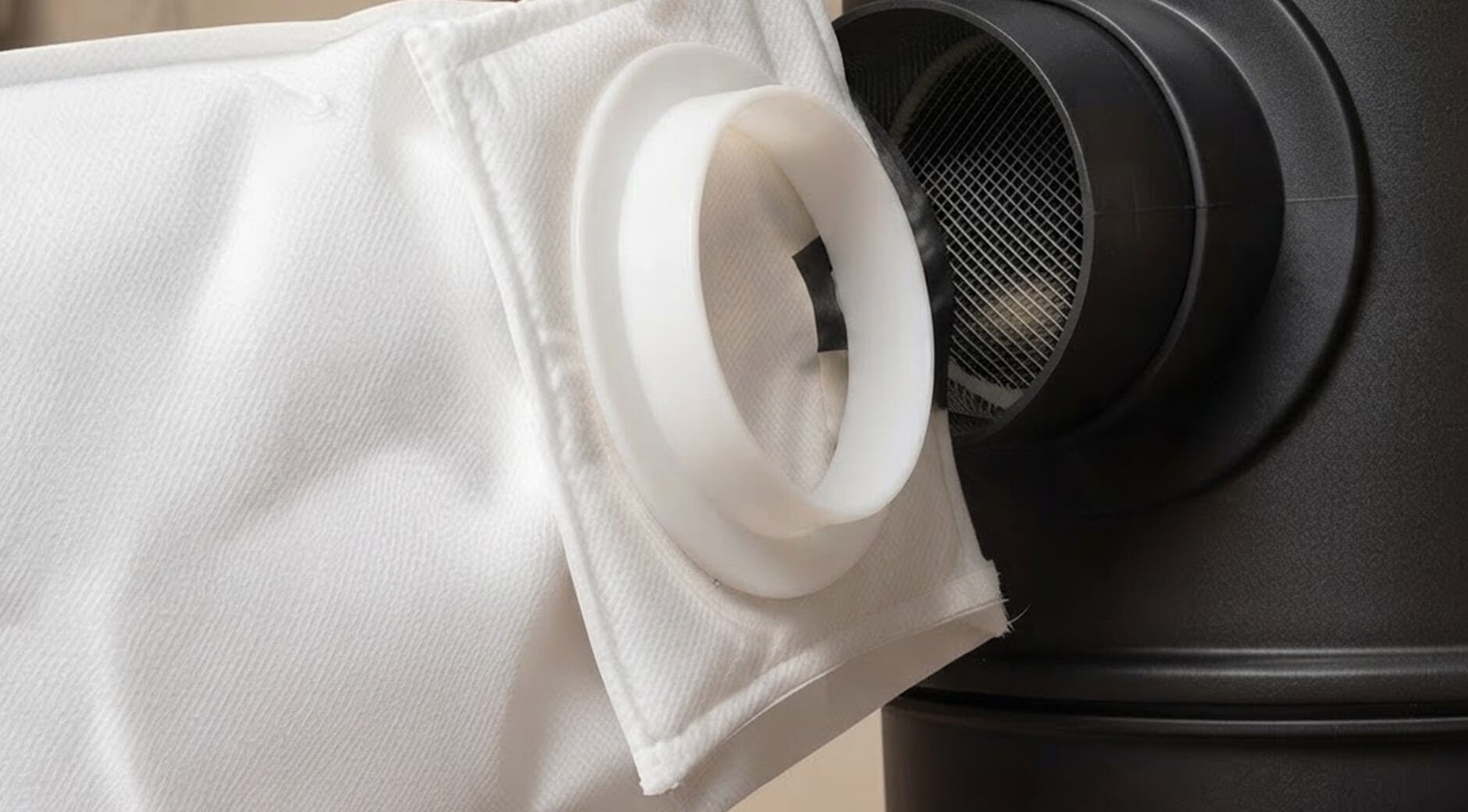
The cloth filter sits between the paper bag and the motor, made from Filtex fibers designed to catch the fine dust the paper bag misses. It lasts far longer than the paper bag.
Replace the 2nd Stage Cloth Filter every five to seven years. One thing worth clearing up: the cloth filter is not washable. Running it through water breaks down the Filtex fibers and undermines its ability to trap fine dust, even if it looks clean afterward. When it is time, replace it outright rather than trying to clean and reuse it.
4th Stage Exhaust Filter: Every Year (If Your System Vents Indoors)
If your central vacuum exhausts into the house rather than outside, the 4th Stage Exhaust Filter is your last line of defense against fine particles, filtering down to one micron. Systems vented outdoors cannot accept this filter, and it is not needed there since dust already exhausts outside the home. It is also optional if your unit sits in a garage or utility area where a little dust discharge is not a concern. For everyone else, knowing when to change your central vacuum filter at this stage matters most for allergy-prone households: replace it annually so allergens do not cycle back into your living space.
Signs You Need to Replace Your Central Vacuum Bag or Filter Sooner
A calendar reminder is a good baseline, but usage varies by household. Watch for these signs when deciding whether it is time to replace a central vacuum bag or filter ahead of schedule:
- A bag that looks bulged or overfull before its usual replacement date
- A musty or dusty smell when the system runs, even right after cleaning
- Reduced suction at every inlet, not just one (rule out a clogged pipe first)
- Dust or debris blowing out of the exhaust
- Visible tears, holes, or a bent metal ring on the cloth filter during inspection
Any one of these means the part in question needs attention now, not at the next scheduled swap.
What Happens If You Skip a Central Vacuum Bag or Filter Replacement
Delaying a central vacuum filter replacement does more than reduce suction. A saturated paper bag restricts airflow through the entire system, which forces the motor to work harder and run hotter to move the same amount of air. Over time, that extra strain shortens the motor’s lifespan and is a common contributor to premature motor failure, a repair that costs far more than a new bag or filter. Staying ahead of the schedule outlined in our Central Vacuum Maintenance Guide protects the most expensive part of your system, not just the part you can see.
Not sure which filter your system needs? Confirm your model before you order, and CentralVac will match you to the exact 1st, 2nd, or 4th Stage part your canister uses.
Which Central Vacuum Systems Use These Bags and Filters
The 1st Stage Paper Bag Filter and 2nd Stage Cloth Filter fit CentralVac’s full line of CV and CVS power units, including:
- CV-7
- CV-11
- CV-16
- CV-19
- CVS-07 / CVS-07DP
- CVS-11 / CVS-11DP
- CVS-16 / CVS-16DP
- CVS-19 / CVS-19DP
- CVS-207 / CVS-207DP
- CVS-211 / CVS-211DP
- CVS-216 / CVS-216DP
- CVS-219 / CVS-219DP
See the full compatibility list in our support FAQs before you order replacement vacuum bags or filters.
How to Replace Your Central Vacuum Bag and Filter
The process takes a few minutes once you know the order of operations:
- Turn off the central vacuum unit before opening the canister.
- Open an inlet to break the suction seal, then lift the lid free by its center knob, moving left to right.
- Remove the used paper bag and discard it.
- Pull out the cloth filter, turn it inside out, and shake out any trapped dust. Inspect it for tears or a bent ring before reinstalling.
- Fit the new paper bag inside the cloth filter, seating the cardboard lip flat against the metal ring.
- Align the lid’s inlet deflector with the canister’s inlet tube and lower it back into place.
Shop central vacuum filters to find the exact replacement part your system needs before you start.
Keep Your CentralVac System Running Like New
Staying ahead of a central vacuum bag replacement or filter change is the simplest maintenance a CentralVac system needs, and it is the maintenance most homeowners forget. Shop central vacuum bags built to fit your system, and keep your home’s air and floors clean the way a central vacuum system is supposed to.
Frequently Asked Questions
Where is the filter in a central vacuum unit?
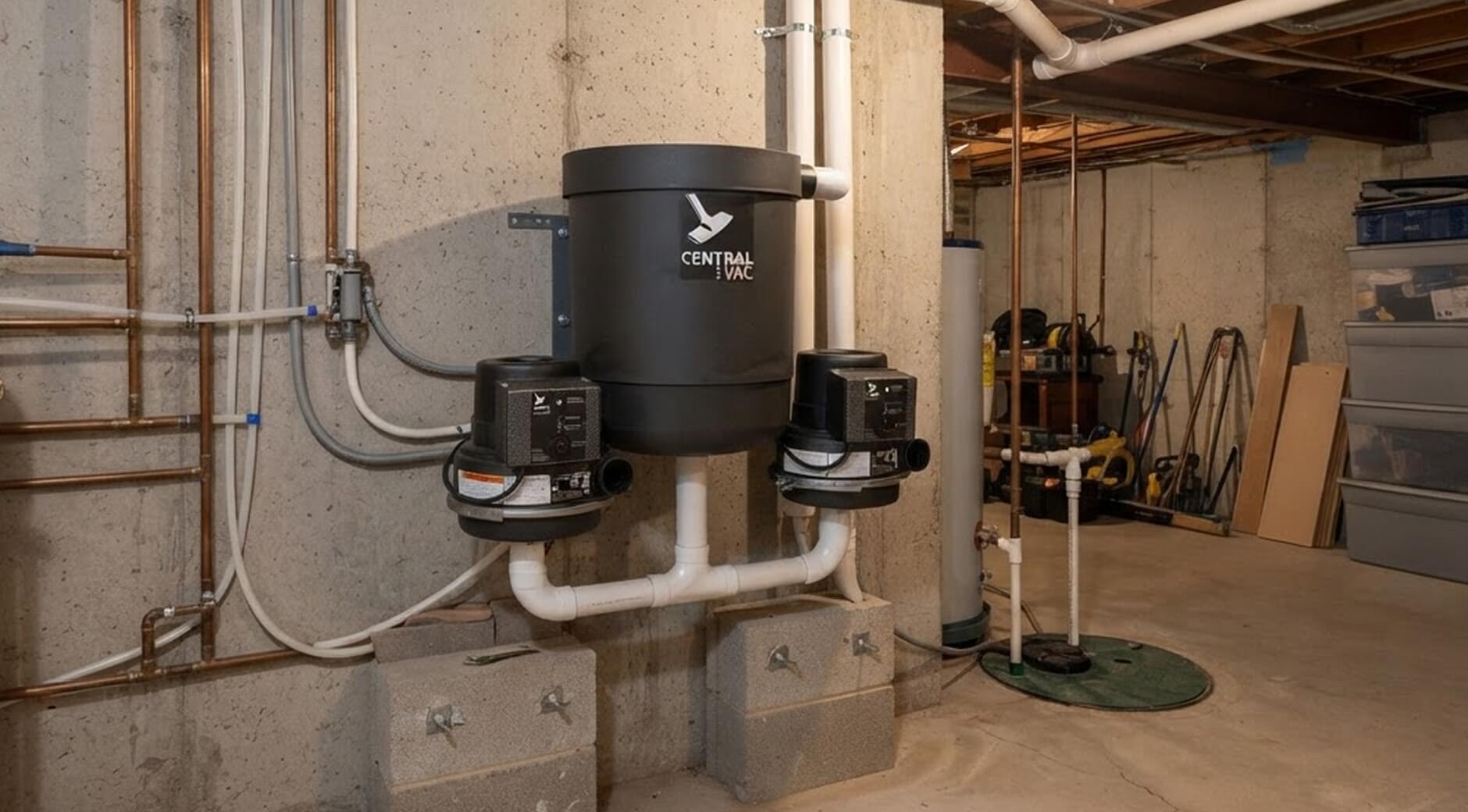
The filter sits inside the canister at the power unit, the pail-shaped container usually mounted in a basement, garage, or utility closet.
How often should I change my central vacuum bag and filter?
Follow a central vacuum filter replacement schedule of three to four months for the paper bag, five to seven years for the cloth filter, and annually for the 4th Stage Exhaust Filter if your system vents indoors. Homes with pets, allergies, or heavy vacuum use should stay on the shorter end of each range, and knowing how often to change a central vacuum bag ahead of visible problems is the easiest way to protect suction.
Can I wash and reuse the 2nd Stage Cloth Filter?
No. The cloth filter is not designed to be washed. Water breaks down the Filtex fibers, which reduces its ability to capture fine dust even if it looks clean. Replace it on schedule instead of cleaning it.
Does replacing the bag or filter improve suction power?
Yes. A full bag or clogged filter is one of the most common causes of reduced suction, since it blocks airflow at the source. Replacing worn components restores suction to like-new levels in most systems.